Digital Operations Solution for Medical Aesthetic Clinics
From in-clinic lean operations to full-chain digital fulfillment
China’s medical aesthetic market has passed RMB 260 billion, yet the top 10 players hold under 5% share, and more than 80% of small and mid-sized clinics are younger than five years. Customer acquisition now costs roughly RMB 8,000–12,000 per person. With traffic subsidies largely gone, the real battle has moved from “buying traffic” to “catching traffic and keeping clients.”
2026 is widely framed as a year of full compliance: major platforms are tightening merchant fulfillment rules, and regulators are stepping up enforcement. Compliance is no longer a slogan—it is a condition for staying in business.
Gut-feel management — once you leave the clinic, you lose control; conversions are a black box
Weak on-site experience — chaotic flow, long waits, reviews that hurt acquisition
Compliance anxiety — consumables without traceability, records that do not hold up
One-and-done clients — no follow-up, no private-domain ops, no repeat visits
Mobile operations platform — stay in control from anywhere
The owner is out ≠ management is blind
Managers at small and mid-sized clinics often wear many hats and split time across locations. Away from the floor, the business becomes a black box: how many visits today, revenue, which consultant converts best, which discount request is stuck in approval—often unknown. Worse, nobody can tie channel spend to real paying clients until month-end reconciliation, when it is already too late.
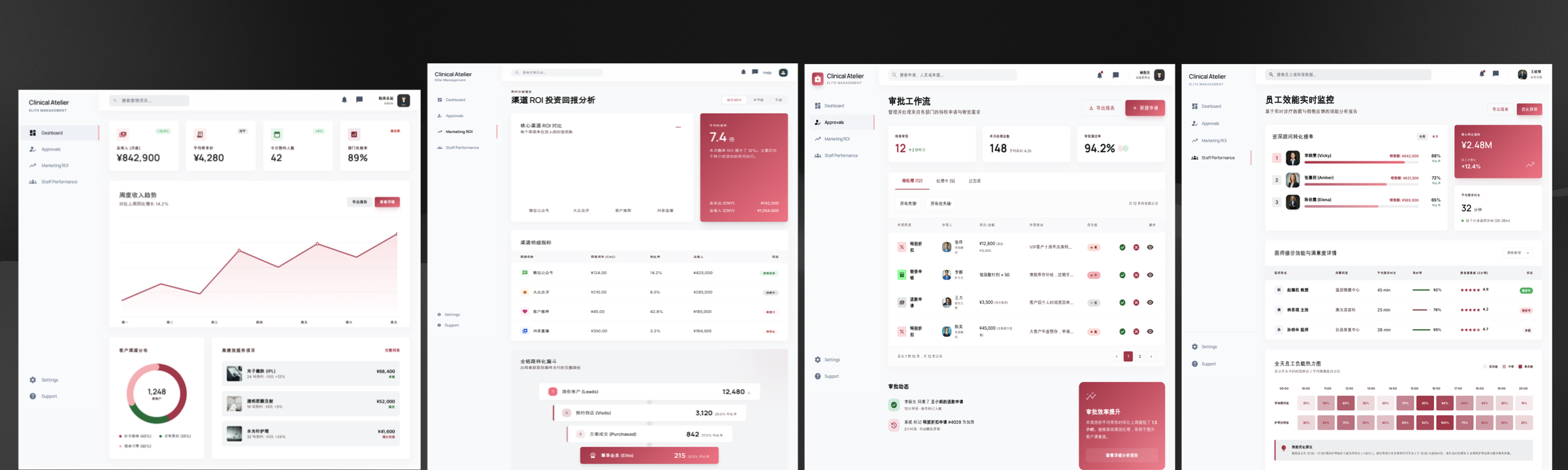
- Live operations dashboard — visits, revenue, average ticket, room load—pulse of the business on your phone
- Mobile approvals — discounts, consumable requests, refunds—no more “waiting for the owner”
- Channel attribution — cost and conversion by channel so every yuan of spend is accountable
- Staff performance — consultant conversion and doctor time in chair, with data for coaching
Intelligent HIS — the backbone of fulfillment
You can only absorb external traffic if internal operations hold
From online booking to departure, a typical journey spans at least seven steps: confirmation, check-in, triage, consultation, treatment, aftercare instructions, and post-visit follow-up. In many clinics this still runs on handoffs, paper, and WeChat groups—missed bookings, wrong items, schedule clashes, and silent post-op follow-ups are common. Dissatisfaction does not stay inside the clinic. Every poor review sits on public platforms where hundreds of millions of views happen each year. Platforms care most about whether you can deliver and close the loop.
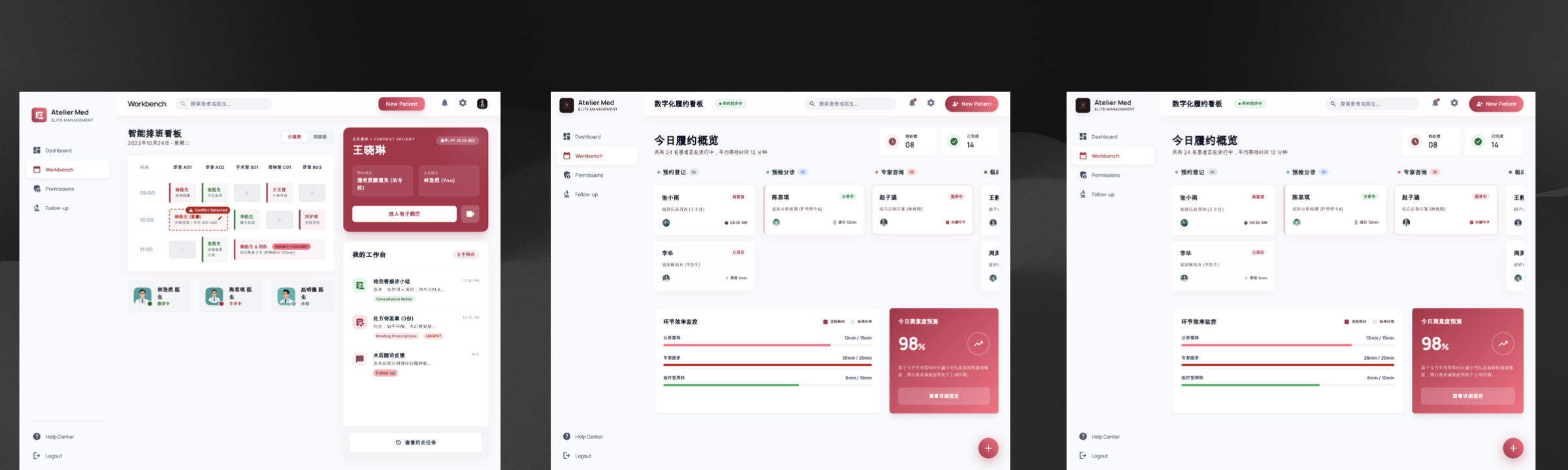
- End-to-end digital fulfillment — from booking and triage to follow-up, status updates without verbal relay
- Smart scheduling and intake — distinct workspaces for doctors, consultants, and nurses; conflict warnings
- Role-based access — each role sees what it should; actions are logged down to the control level
- Post-treatment follow-up — automated reminders, before/after photos one tap away, fewer surprises for patients
Electronic records and consumables — the compliance layer
In 2026, every syringe needs a clear story
As rules tighten and platform policies land, clinics face compliance pressure like never before: where did this consumable come from, which client used it, do stock counts match reality, are EMRs complete? “Good enough” used to pass; now each gap can mean penalties or down-ranking on platforms. In practice, many clinics still rely on paper charts and Excel for inventory—ten minutes to find a file, half a day to count stock, numbers that never reconcile. It is not unwillingness to comply; the tooling never caught up.
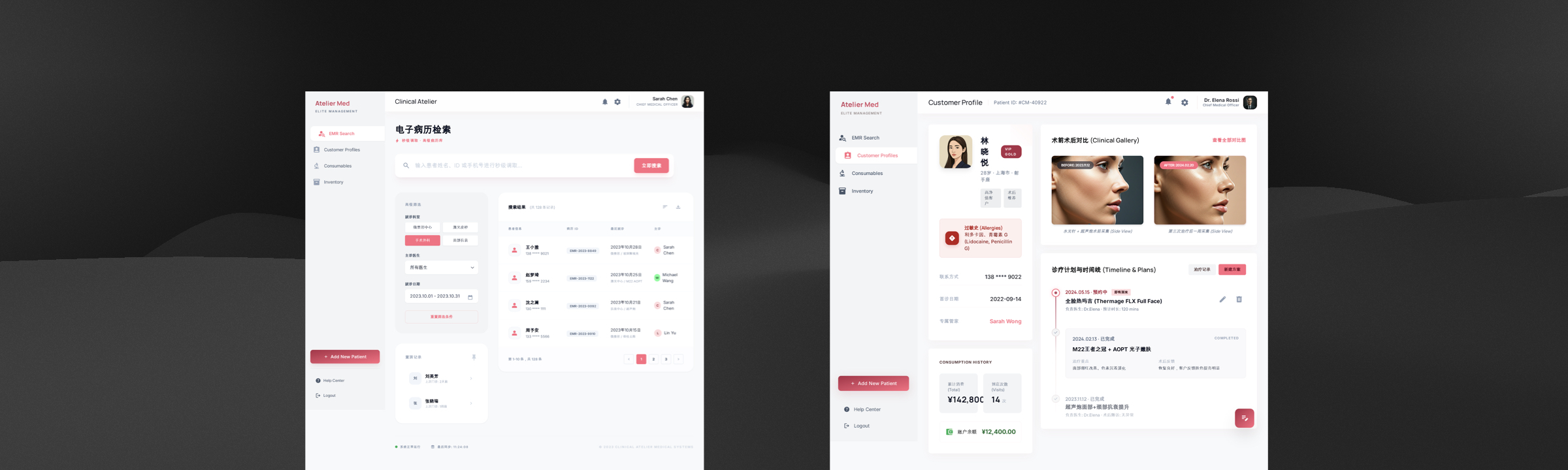
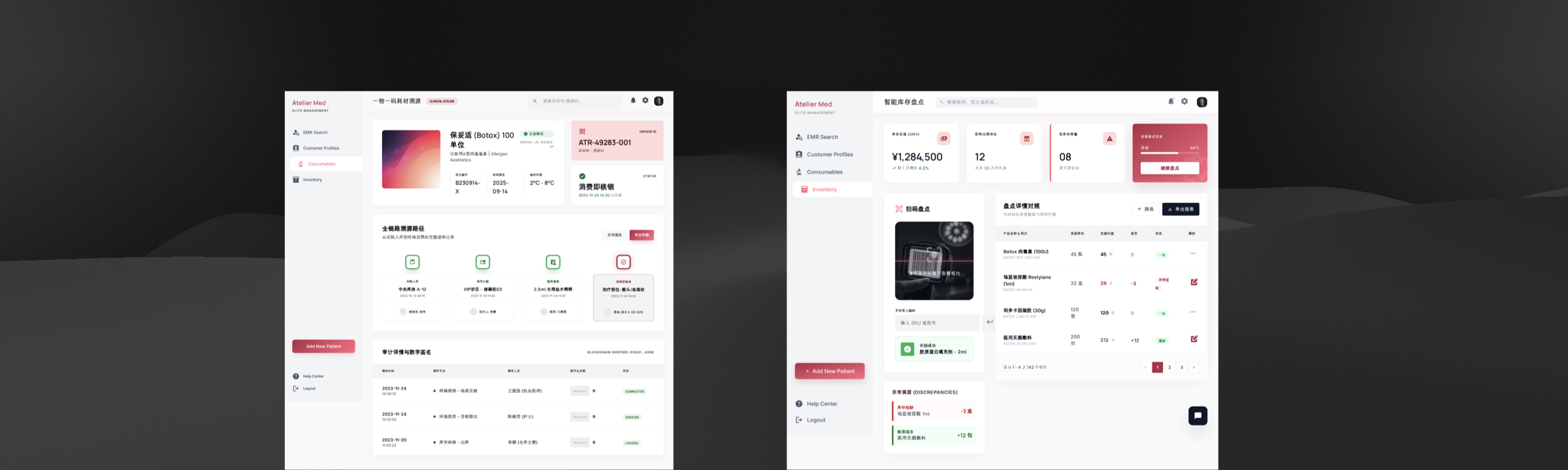
- Instant EMR retrieval — keyword search to the right chart in seconds instead of ten minutes of digging
- Structured client profiles — visits, before/after photos, allergies on one screen for faster conversations
- One-code-one-item traceability — from inbound to consumption, write-offs with clear lineage
- Smart stock counts — scan-to-reconcile, alerts, and tighter variance control
Private-domain mini program — retention on your own turf
Paid media for acquisition; private domain for retention—they are complements
At RMB 8,000–12,000 to acquire a client, most clinics still stop at “treatment done, payment collected.” No follow-up channel, no repurchase path, no membership—every expensive lead becomes a one-off. Clients are often willing to return; friction is the problem. Balance checks by phone, booking only at the front desk, skincare only in-store—when switching costs beat returning, churn follows.
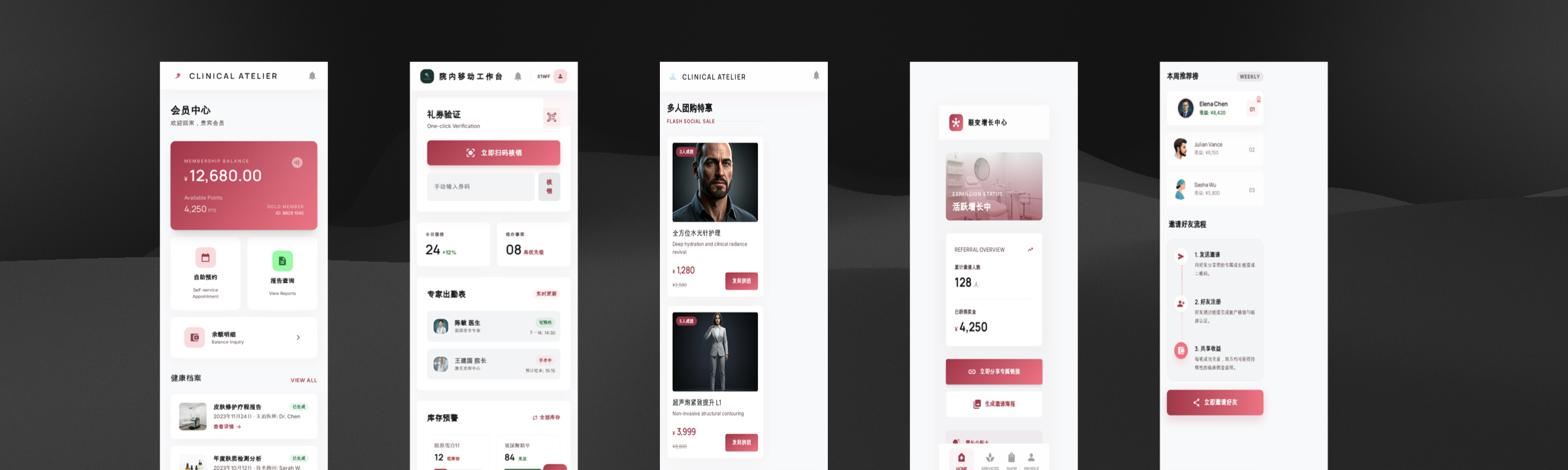
- Member self-service — reports, balance, and booking online—less front-desk load and fewer drop-offs from slow response
- Repeat purchase paths — skincare and perks for existing clients, freeing paid slots for new demand
- Referral mechanics — group buys, share-to-coupon, using existing clients to lower single-channel risk
Ecosystem readiness — architecture built to extend
Not a platform rival—infrastructure for the ecosystem
The architecture was designed to connect with major traffic platforms. Better in-clinic efficiency should show up as faster redemption, tighter inventory, and more standardized service on the platform side. Internal operations have to run before traffic pays off.
- Voucher redemption (roadmap) — platform codes redeemed in one tap on mobile, fewer manual errors
- Inventory sharing (roadmap) — doctor availability and bookable slots in sync to lift conversion on platforms
- Compliance-ready APIs — structure aligned with mainstream platform requirements for faster audits